All posts

How to build a cognitively diverse team

Author
Dave Winsborough
Created on
February 20, 2024

Cultivating the diversity of thought is crucial to a company. There is now considerable scientific evidence for the idea that cognitive or deep diversity - that is, diversity in how people feel, think, and act - has significant benefits for organizations, particularly if it is managed well.

DEI has long been integral to businesses' people strategy, fostering diversity in age, gender, and ethnicity among other demographic characteristics over the years. These elements of diversity are important in any workplace. The advantages of acknowledging cognitive diversity are rapidly gaining recognition as well.

Cognitive Diversity significantly influences an individual's approach to and success in fulfilling their role or job’s assigned tasks. Thus, impacting how teams collaborate and how a business as a whole is able to innovate. Similar to other forms of diversity, it is an essential element contributing to a teams’ success.

Diversity drives organizational growth

Companies with above-average diversity on their management teams reported innovation revenue 19 percentage points higher than that of companies with below-average leadership diversity. Among profitable companies, increasing female representation at board level from zero to 30% delivered a typical firm a 15% increase in profitability. 

Cognitive diversity is especially critical when organizations select employees mostly on technical skills, such as with software engineers. Indeed, their ability to perform highly as individual contributors is very much dependent on their technical expertise and IQ. So, often the development of people skills or interpersonal skills is neglected, which are key not just to working with others, but also - and particularly - to managing and leading others.

Four ways to build a cognitively diverse team

1. Hire people different from you, even though it makes your job harder. 

People unconsciously prefer those who are similar to themselves: so if you are methodical and analytical, try finding people who complement your talents through creativity and spontaneity. Using personality tests like Deeper Signals identifies your thinking style vis a vis candidates during hiring processes.

2. Broaden and deepen your candidate pool

Rather than competing with companies like yours, target ads in non-traditional talent pools.  For example, look for talent from arts and humanities, rather than top technical schools. Or reduce the focus on technical qualifications — after all, Steve Jobs was a drop-out.

3.  Extend team thinking

We naturally play to our strengths, which is a means of reinforcing what we already do well.  Instead, have the team pair up with people different from themselves and compare approaches to problem solving.  Having people play against type is a great way to boost creativity and deepen relationships.

4. Create a safe space for sharing ideas 

Foster a psychologically safe culture where expressing divergent opinions is valued. True psychological safety also means challenging the thinking of others (respectfully). In a safe environment people can go beyond the one right answer and generate a range of alternatives.

‍

‍

‍Harness cognitive diversity with Deeper Signals

You as a leader can help your teams maximize creativity and output by building cognitively diverse teams. This requires commitment and the right tools. Deeper Signals is devoted to providing leaders with the means to create high-performing and cognitively diverse teams. Explore our range of solutions.

‍

‍

All posts

How to build a cognitively diverse team

Author
Dave Winsborough
Created on
February 20, 2024

Cultivating the diversity of thought is crucial to a company. There is now considerable scientific evidence for the idea that cognitive or deep diversity - that is, diversity in how people feel, think, and act - has significant benefits for organizations, particularly if it is managed well.

DEI has long been integral to businesses' people strategy, fostering diversity in age, gender, and ethnicity among other demographic characteristics over the years. These elements of diversity are important in any workplace. The advantages of acknowledging cognitive diversity are rapidly gaining recognition as well.

Cognitive Diversity significantly influences an individual's approach to and success in fulfilling their role or job’s assigned tasks. Thus, impacting how teams collaborate and how a business as a whole is able to innovate. Similar to other forms of diversity, it is an essential element contributing to a teams’ success.

Diversity drives organizational growth

Companies with above-average diversity on their management teams reported innovation revenue 19 percentage points higher than that of companies with below-average leadership diversity. Among profitable companies, increasing female representation at board level from zero to 30% delivered a typical firm a 15% increase in profitability. 

Cognitive diversity is especially critical when organizations select employees mostly on technical skills, such as with software engineers. Indeed, their ability to perform highly as individual contributors is very much dependent on their technical expertise and IQ. So, often the development of people skills or interpersonal skills is neglected, which are key not just to working with others, but also - and particularly - to managing and leading others.

Four ways to build a cognitively diverse team

1. Hire people different from you, even though it makes your job harder. 

People unconsciously prefer those who are similar to themselves: so if you are methodical and analytical, try finding people who complement your talents through creativity and spontaneity. Using personality tests like Deeper Signals identifies your thinking style vis a vis candidates during hiring processes.

2. Broaden and deepen your candidate pool

Rather than competing with companies like yours, target ads in non-traditional talent pools.  For example, look for talent from arts and humanities, rather than top technical schools. Or reduce the focus on technical qualifications — after all, Steve Jobs was a drop-out.

3.  Extend team thinking

We naturally play to our strengths, which is a means of reinforcing what we already do well.  Instead, have the team pair up with people different from themselves and compare approaches to problem solving.  Having people play against type is a great way to boost creativity and deepen relationships.

4. Create a safe space for sharing ideas 

Foster a psychologically safe culture where expressing divergent opinions is valued. True psychological safety also means challenging the thinking of others (respectfully). In a safe environment people can go beyond the one right answer and generate a range of alternatives.

‍

‍

‍Harness cognitive diversity with Deeper Signals

You as a leader can help your teams maximize creativity and output by building cognitively diverse teams. This requires commitment and the right tools. Deeper Signals is devoted to providing leaders with the means to create high-performing and cognitively diverse teams. Explore our range of solutions.

‍

‍

All posts

How to build a cognitively diverse team

Author
Dave Winsborough
Created on
February 20, 2024

Cultivating the diversity of thought is crucial to a company. There is now considerable scientific evidence for the idea that cognitive or deep diversity - that is, diversity in how people feel, think, and act - has significant benefits for organizations, particularly if it is managed well.

DEI has long been integral to businesses' people strategy, fostering diversity in age, gender, and ethnicity among other demographic characteristics over the years. These elements of diversity are important in any workplace. The advantages of acknowledging cognitive diversity are rapidly gaining recognition as well.

Cognitive Diversity significantly influences an individual's approach to and success in fulfilling their role or job’s assigned tasks. Thus, impacting how teams collaborate and how a business as a whole is able to innovate. Similar to other forms of diversity, it is an essential element contributing to a teams’ success.

Diversity drives organizational growth

Companies with above-average diversity on their management teams reported innovation revenue 19 percentage points higher than that of companies with below-average leadership diversity. Among profitable companies, increasing female representation at board level from zero to 30% delivered a typical firm a 15% increase in profitability. 

Cognitive diversity is especially critical when organizations select employees mostly on technical skills, such as with software engineers. Indeed, their ability to perform highly as individual contributors is very much dependent on their technical expertise and IQ. So, often the development of people skills or interpersonal skills is neglected, which are key not just to working with others, but also - and particularly - to managing and leading others.

Four ways to build a cognitively diverse team

1. Hire people different from you, even though it makes your job harder. 

People unconsciously prefer those who are similar to themselves: so if you are methodical and analytical, try finding people who complement your talents through creativity and spontaneity. Using personality tests like Deeper Signals identifies your thinking style vis a vis candidates during hiring processes.

2. Broaden and deepen your candidate pool

Rather than competing with companies like yours, target ads in non-traditional talent pools.  For example, look for talent from arts and humanities, rather than top technical schools. Or reduce the focus on technical qualifications — after all, Steve Jobs was a drop-out.

3.  Extend team thinking

We naturally play to our strengths, which is a means of reinforcing what we already do well.  Instead, have the team pair up with people different from themselves and compare approaches to problem solving.  Having people play against type is a great way to boost creativity and deepen relationships.

4. Create a safe space for sharing ideas 

Foster a psychologically safe culture where expressing divergent opinions is valued. True psychological safety also means challenging the thinking of others (respectfully). In a safe environment people can go beyond the one right answer and generate a range of alternatives.

‍

‍

‍Harness cognitive diversity with Deeper Signals

You as a leader can help your teams maximize creativity and output by building cognitively diverse teams. This requires commitment and the right tools. Deeper Signals is devoted to providing leaders with the means to create high-performing and cognitively diverse teams. Explore our range of solutions.

‍

‍

All posts

How to build a cognitively diverse team

Author
Dave Winsborough
Created on
February 20, 2024

Cultivating the diversity of thought is crucial to a company. There is now considerable scientific evidence for the idea that cognitive or deep diversity - that is, diversity in how people feel, think, and act - has significant benefits for organizations, particularly if it is managed well.

DEI has long been integral to businesses' people strategy, fostering diversity in age, gender, and ethnicity among other demographic characteristics over the years. These elements of diversity are important in any workplace. The advantages of acknowledging cognitive diversity are rapidly gaining recognition as well.

Cognitive Diversity significantly influences an individual's approach to and success in fulfilling their role or job’s assigned tasks. Thus, impacting how teams collaborate and how a business as a whole is able to innovate. Similar to other forms of diversity, it is an essential element contributing to a teams’ success.

Diversity drives organizational growth

Companies with above-average diversity on their management teams reported innovation revenue 19 percentage points higher than that of companies with below-average leadership diversity. Among profitable companies, increasing female representation at board level from zero to 30% delivered a typical firm a 15% increase in profitability. 

Cognitive diversity is especially critical when organizations select employees mostly on technical skills, such as with software engineers. Indeed, their ability to perform highly as individual contributors is very much dependent on their technical expertise and IQ. So, often the development of people skills or interpersonal skills is neglected, which are key not just to working with others, but also - and particularly - to managing and leading others.

Four ways to build a cognitively diverse team

1. Hire people different from you, even though it makes your job harder. 

People unconsciously prefer those who are similar to themselves: so if you are methodical and analytical, try finding people who complement your talents through creativity and spontaneity. Using personality tests like Deeper Signals identifies your thinking style vis a vis candidates during hiring processes.

2. Broaden and deepen your candidate pool

Rather than competing with companies like yours, target ads in non-traditional talent pools.  For example, look for talent from arts and humanities, rather than top technical schools. Or reduce the focus on technical qualifications — after all, Steve Jobs was a drop-out.

3.  Extend team thinking

We naturally play to our strengths, which is a means of reinforcing what we already do well.  Instead, have the team pair up with people different from themselves and compare approaches to problem solving.  Having people play against type is a great way to boost creativity and deepen relationships.

4. Create a safe space for sharing ideas 

Foster a psychologically safe culture where expressing divergent opinions is valued. True psychological safety also means challenging the thinking of others (respectfully). In a safe environment people can go beyond the one right answer and generate a range of alternatives.

‍

‍

‍Harness cognitive diversity with Deeper Signals

You as a leader can help your teams maximize creativity and output by building cognitively diverse teams. This requires commitment and the right tools. Deeper Signals is devoted to providing leaders with the means to create high-performing and cognitively diverse teams. Explore our range of solutions.

‍

‍

All posts

How to build a cognitively diverse team

Customer
Job Title

Cultivating the diversity of thought is crucial to a company. There is now considerable scientific evidence for the idea that cognitive or deep diversity - that is, diversity in how people feel, think, and act - has significant benefits for organizations, particularly if it is managed well.

DEI has long been integral to businesses' people strategy, fostering diversity in age, gender, and ethnicity among other demographic characteristics over the years. These elements of diversity are important in any workplace. The advantages of acknowledging cognitive diversity are rapidly gaining recognition as well.

Cognitive Diversity significantly influences an individual's approach to and success in fulfilling their role or job’s assigned tasks. Thus, impacting how teams collaborate and how a business as a whole is able to innovate. Similar to other forms of diversity, it is an essential element contributing to a teams’ success.

Diversity drives organizational growth

Companies with above-average diversity on their management teams reported innovation revenue 19 percentage points higher than that of companies with below-average leadership diversity. Among profitable companies, increasing female representation at board level from zero to 30% delivered a typical firm a 15% increase in profitability. 

Cognitive diversity is especially critical when organizations select employees mostly on technical skills, such as with software engineers. Indeed, their ability to perform highly as individual contributors is very much dependent on their technical expertise and IQ. So, often the development of people skills or interpersonal skills is neglected, which are key not just to working with others, but also - and particularly - to managing and leading others.

Four ways to build a cognitively diverse team

1. Hire people different from you, even though it makes your job harder. 

People unconsciously prefer those who are similar to themselves: so if you are methodical and analytical, try finding people who complement your talents through creativity and spontaneity. Using personality tests like Deeper Signals identifies your thinking style vis a vis candidates during hiring processes.

2. Broaden and deepen your candidate pool

Rather than competing with companies like yours, target ads in non-traditional talent pools.  For example, look for talent from arts and humanities, rather than top technical schools. Or reduce the focus on technical qualifications — after all, Steve Jobs was a drop-out.

3.  Extend team thinking

We naturally play to our strengths, which is a means of reinforcing what we already do well.  Instead, have the team pair up with people different from themselves and compare approaches to problem solving.  Having people play against type is a great way to boost creativity and deepen relationships.

4. Create a safe space for sharing ideas 

Foster a psychologically safe culture where expressing divergent opinions is valued. True psychological safety also means challenging the thinking of others (respectfully). In a safe environment people can go beyond the one right answer and generate a range of alternatives.

‍

‍

‍Harness cognitive diversity with Deeper Signals

You as a leader can help your teams maximize creativity and output by building cognitively diverse teams. This requires commitment and the right tools. Deeper Signals is devoted to providing leaders with the means to create high-performing and cognitively diverse teams. Explore our range of solutions.

‍

‍

Ready for your Spotlight?
Contact us to book your Customer Spotlight and showcase your work to an extensive, global audience!
Start your free trial today
Free access to Deeper Signals’ quick, scientific assessments, feedback tools, and more.
Start Free Trial
Recent posts
Guides & Tips
Is Your Hiring Assessment Defensible? A 4-Question Test
Could you prove your hiring assessment is fair and job-related if someone asked? With courts now holding hiring tools accountable, "the software did it" is no longer a defense. Here is a 4-question test to check where you stand.
Read more
Articles
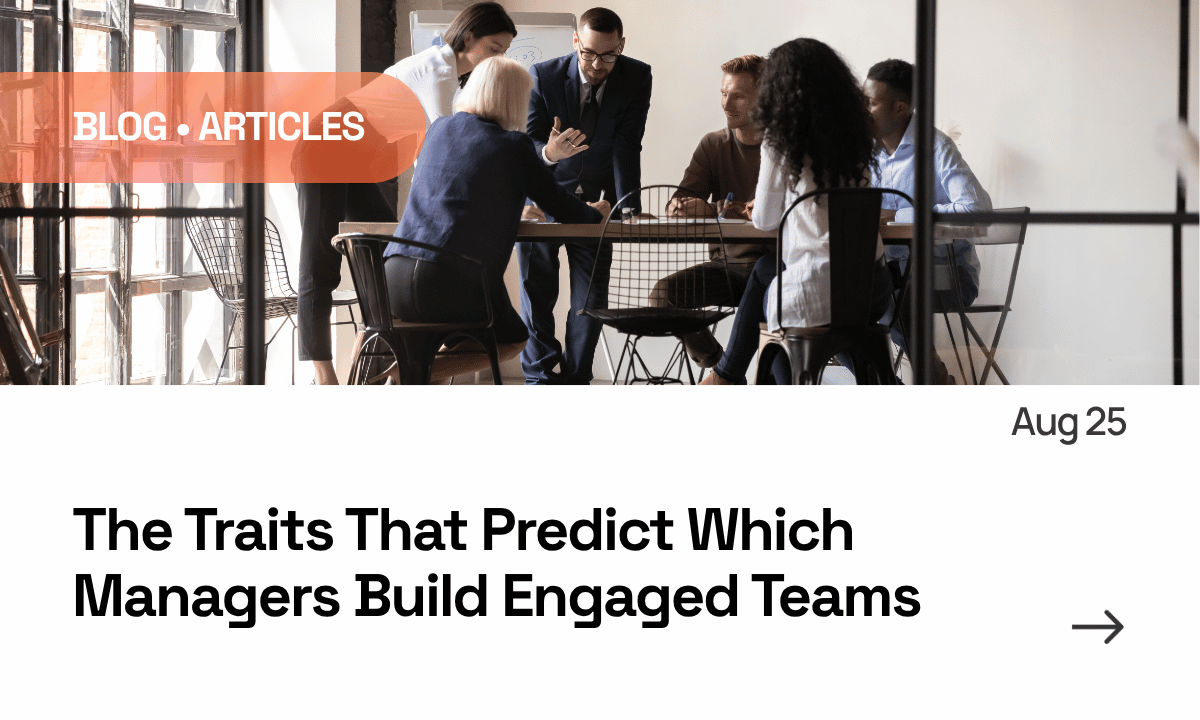
The Traits That Predict Which Managers Build Engaged Teams
We promote the most confident person into management. The evidence says that's often the wrong instinct. Here's what actually predicts a manager who builds an engaged team.
Read more
Articles
What Does Your Hiring Process Signal to Candidates?
A hiring process is a two-way evaluation. While you read candidates, they're reading you. Here is what the research says about designing hiring that wins the candidates you actually want.
Read more
Guides & Tips
How to Turn Executive Assessment Data into a Leadership Narrative with an AI Skill
Psychometrics, 360s, interviews, references — this free Deeper Signals skill codes it all against a role's success criteria into an auditable leadership narrative.
Read more
Guides & Tips
How to Review an Assessment's Evidence Base with an AI Skill
How well is that assessment actually evidenced? This free Deeper Signals AI skill maps any instrument against the APA, SIOP, EFPA, and ITC standards.
Read more
You might also find useful
Guides & Tips
Is Your Hiring Assessment Defensible? A 4-Question Test
Could you prove your hiring assessment is fair and job-related if someone asked? With courts now holding hiring tools accountable, "the software did it" is no longer a defense. Here is a 4-question test to check where you stand.
Read more
Articles
The Traits That Predict Which Managers Build Engaged Teams
We promote the most confident person into management. The evidence says that's often the wrong instinct. Here's what actually predicts a manager who builds an engaged team.
Read more
Articles
What Does Your Hiring Process Signal to Candidates?
A hiring process is a two-way evaluation. While you read candidates, they're reading you. Here is what the research says about designing hiring that wins the candidates you actually want.
Read more
Guides & Tips
How to Turn Executive Assessment Data into a Leadership Narrative with an AI Skill
Psychometrics, 360s, interviews, references — this free Deeper Signals skill codes it all against a role's success criteria into an auditable leadership narrative.
Read more
Guides & Tips
How to Review an Assessment's Evidence Base with an AI Skill
How well is that assessment actually evidenced? This free Deeper Signals AI skill maps any instrument against the APA, SIOP, EFPA, and ITC standards.
Read more
Want more articles like this?
Subscribe to our newsletter
Practical insights on people and performance, delivered to your inbox
Subscribe